Innovative services | Environmental Sustainability | Taiwan Blood Services Foundation ESG

Environmental Sustainability


Innovative Services
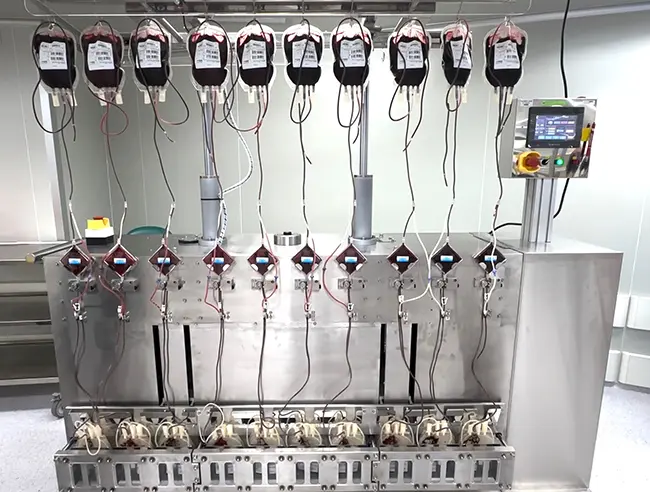
Component Processing Automation — Automated Leukoreduction Equipment
To standardize the blood component processing workflow, reduce staff physical burden, and prevent occupational injuries, Taipei Blood Center officially introduced and implemented the automated "Leukoreduction Air-Exhaust Device" in 2023, successfully obtaining a National Utility Model Patent Certificate (Patent No. M655514) in May 2024. Traditional leukoreduction required manual operation—including lifting and hanging blood bags overhead and squatting to manually express air from filtered blood bags—resulting in high physical labor intensity and limited standardization.
With this automated equipment deployed, the system automatically adjusts the elevation of blood bag hooks based on the operator's height, while automatically squeezing and exhausting residual air from the bags. This innovation not only significantly alleviates staff physical strain and labor intensity, but also achieves full automation and standardization. Through effective and standardized leukoreduction, the quality of leukoreduced blood products supplied to hospitals remains highly consistent, preventing transfusion-transmitted infections, reducing adverse transfusion reaction risks, and comprehensively enhancing the safety and quality of blood products.
Phasing Out Aging Freezers with B Medical Contact Shock Freezers — Realizing Green Healthcare and a Friendly Workplace
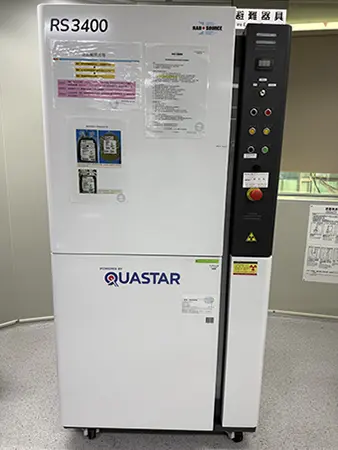
To advance environmental sustainability and workplace ergonomics, Taipei Blood Center upgraded its rapid-freezing infrastructure by officially commissioning the B Medical Systems Contact Shock Freezer (CSF101) in 2024. This equipment renewal not only achieves remarkable milestones in energy efficiency, decarbonization, and regulatory compliance, but also significantly mitigates occupational health and safety risks, exemplifying the Center's unwavering commitment to ESG principles.
Compliance with Environmental Regulations and Elimination of High-GWP Refrigerants: In response to the Ministry of Environment's "Regulations on Hydrofluorocarbon (HFC) Management" effective in 2025, Taipei Blood Center proactively spearheaded a green transition in refrigerants. The legacy walk-in blast freezers utilized R507A refrigerant, which possesses an exceptionally high Global Warming Potential (GWP) of 3,985. The newly introduced B Medical CSF unit transitions entirely to eco-friendly R449A refrigerant, cutting the GWP value drastically down to 1,397—a reduction of over 60%. This shift proactively aligns with national phasedown policies for HFCs and curbs potential greenhouse gas emission risks directly at the source.
High-Efficiency Thermal Conduction and Significant Energy Savings: In terms of electrical conservation and carbon reduction, the B Medical CSF abandons conventional convection-based air-blast freezing in favor of advanced direct-contact thermal conduction, rapidly chilling plasma cores to -25°C within 40 minutes. For overnight operations, the system features intelligent energy management: energy consumption per plasma bag is merely 0.10 kWh in practice, compared to 0.48 kWh required by the legacy system. This represents an approximate 4.8-fold reduction in power consumption, substantially curbing operational electricity waste and the facility's carbon footprint.
Optimizing Automation and Cultivating a Supportive Workplace: Fulfilling social responsibility and personnel care, the unit's level-ground roll-in loading design completely eliminates the hazardous manual hauling of 100- to 130-kg loads up and down ramps, precluding sudden muscular strain and tipping hazards. Sixty-five percent of staff recognized this ergonomic relief as a key operational advantage. Moreover, transitioning to a flexible, high-frequency workflow noticeably alleviates psychological stress during night shifts. The contact-plate freezing mechanism also yields exceptionally flat plasma bags, vastly improving barcode scanning accuracy and automated label adhesion rates, thereby achieving a win-win outcome for both occupational safety and technical standardization.
Provision of Irradiated Blood Components
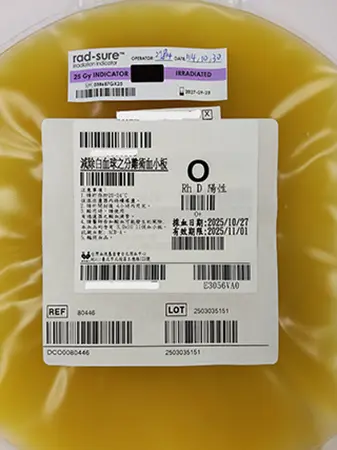
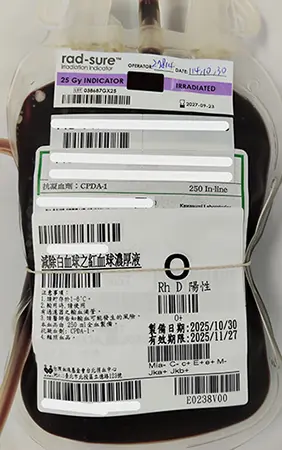
To enhance transfusion safety and clinical care quality, Taipei Blood Center commenced the provision of irradiated blood components in October 2023. Irradiating blood components with X-rays prevents donor T-lymphocyte proliferation, effectively averting fatal Transfusion-Associated Graft-versus-Host Disease (TA-GVHD). This intervention substantially minimizes the risk of transfusion-related immunological reactions and safeguards immunocompromised, high-risk patients. The X-ray blood irradiation equipment commissioned by Taipei Blood Center is engineered with comprehensive radiation shielding; operators have zero exposure to radioactive sources, precluding risks of radiation leakage, residual contamination, or radioactive waste generation, thereby posing no environmental hazards. From 2024 to 2025, Taipei Blood Center supplied 2,801 units of irradiated blood components across 18 healthcare institutions. In addition to bolstering patient transfusion safety, this service effectively controls occupational safety risks through rigorous protective engineering and robust management, demonstrating equal dedication to healthcare excellence and environmental sustainability.
Adopting Eco-Friendly Packaging for Blood Products to Enhance Transport Quality
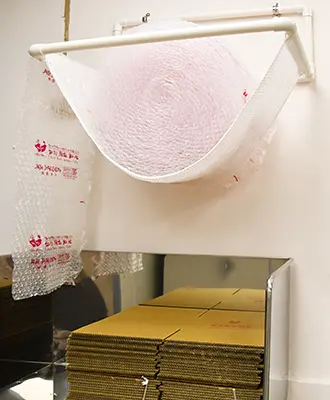
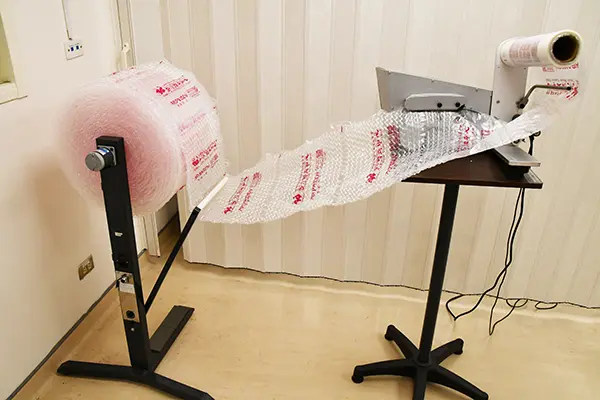
Following Taipei Blood Center's introduction of PVC-free, eco-friendly air cushions containing 25% post-consumer recycled (PCR) materials in late 2022, remarkable outcomes were achieved throughout 2024 and 2025. By utilizing 90% air to replace solid plastics, the packaging improves warehouse storage efficiency by 30% and conforms snugly around blood components, significantly minimizing in-transit damage. Compared to conventional PVC materials, this transition eliminates dioxin toxicity and phthalate leaching risks at the source, achieving 100% chlorine-free lifecycle emissions. Furthermore, the combination of lightweighting and recycled content markedly reduces lifecycle carbon emissions. While ensuring blood products remain sterile and intact throughout cold-chain transit, this initiative successfully fosters a green healthcare supply chain and fulfills our commitment to environmental sustainability.
Supporting Public Advocacy with Low-Carbon Vehicles: Fostering Environmental Friendliness, Local Outreach, and Sustainable Action
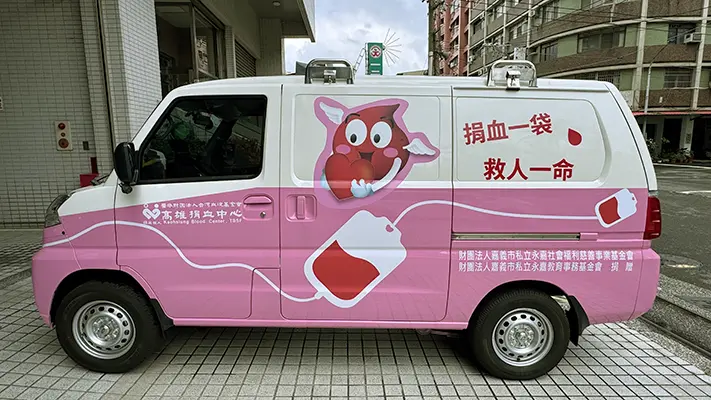
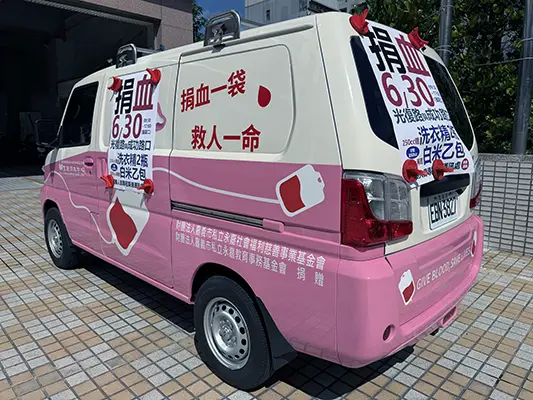
The Foundation continuously advances its sustainable operations and low-carbon transformation strategies by embedding environmental stewardship into blood donor recruitment and community service frameworks. By modernizing and optimizing public outreach tools, we enhance both the environmental performance and social impact of our charitable initiatives. Pioneering this movement, Kaohsiung Blood Center integrated all-electric blood donation promotion vehicles into its fleet as mobile platforms for blood advocacy, community outreach, and health education. This initiative strengthens frontline operational mobility while achieving green transportation milestones through carbon reduction and noise mitigation.
Compared to conventional fuel-powered promotion vehicles, all-electric vehicles effectively curb carbon emissions and air pollutants during operation. Furthermore, they significantly lower the impact of vehicle idling and operating noise on neighborhood environments, comprehensively elevating the eco-friendliness of our public outreach services.
Office Digitization
Kaohsiung Blood Center developed a cloud-based planning handover log to digitally archive event planning, implementation milestones, communication records, and critical notes, thereby reinforcing knowledge management and succession mechanisms. Through cloud sharing and real-time updates, this initiative not only enhances cross-departmental collaboration efficiency, but also closes information gaps during personnel transitions, advancing organizational resilience and management transparency.
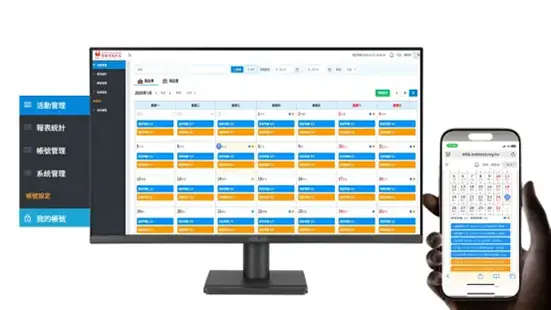
Kaohsiung Blood Center adopted the "Cloud-Based Planning Handover Log" to digitize event planning, milestone tracking, and decision-making processes, creating a real-time shared knowledge management platform. Utilizing cloud collaboration and KPI-driven tracking, the system improves cross-departmental communication efficiency, standardization, and paperless continuity while preventing record omissions. Preserving institutional knowledge prevents operational disruption during handovers, supporting operational resilience and carbon reduction goals.
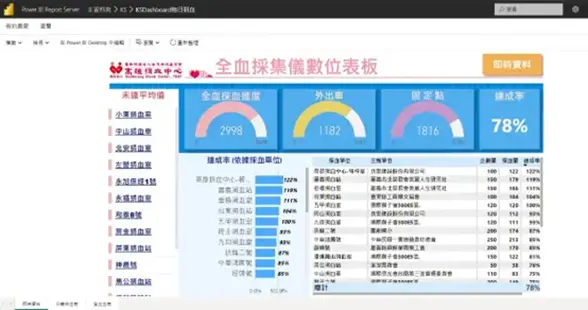
Kaohsiung Blood Center established a digital visitor management system to replace conventional paper logbooks, improving visitor tracking efficiency, accuracy, and facility security. Through digital registration and record-keeping mechanisms, personnel movements are accurately tracked, reinforcing facility security management and audit traceability. Concurrently, paper consumption is curtailed to advance smart, paperless administration, reflecting the Foundation's commitment to efficiency and sustainability in daily operations.
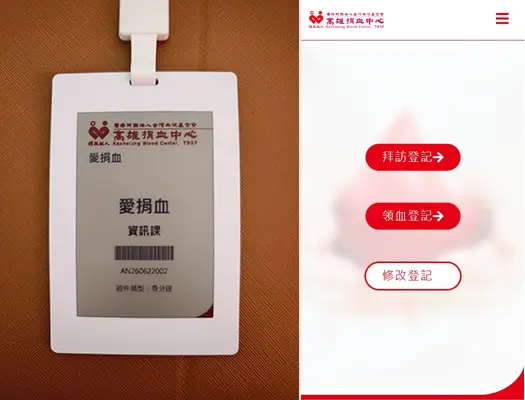
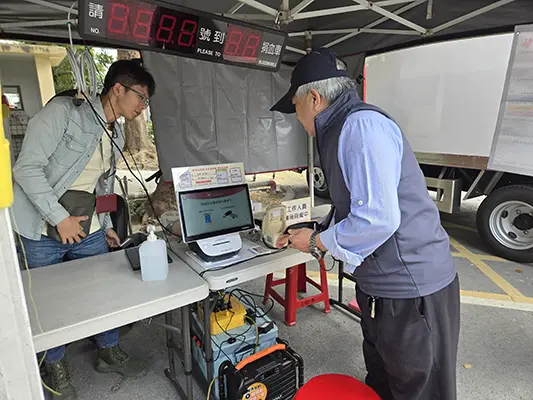
Kaohsiung Blood Center deployed a self-service check-in system across mobile blood drive sites, offering donors a more convenient check-in and data registration process to streamline on-site operations. The system helps shorten wait times, improves data entry accuracy, and relieves frontline staff of repetitive administrative tasks. This enables personnel to dedicate greater focus to donor care and service quality, comprehensively advancing smart operations.