
Articles
2024.02.20
News | Taiwan Blood Services Foundation ESG
International Perspective: Blood Supply Resilience Is a Common Global Issue
Natural disasters, disease outbreaks, or supply chain disruptions can at any time plunge a country’s blood supply system into crisis—this is a reality that has been repeatedly confirmed by the international blood medicine community in recent years. Inter-agency coordination, real-time inventory monitoring, and business continuity capabilities are now regarded as the three key elements in maintaining blood supply resilience. In 2023, the World Health Organization published Guidance on Ensuring Adequate Safe Blood Supply in Emergencies, providing blood establishments around the world with a preparedness framework for risk assessment, inventory management, and business continuity, further strengthening this international consensus. The Taiwan Blood Services Foundation’s actions to enhance the resilience of blood donation and supply are a proactive response to this consensus. From maintaining a three-month safe inventory of blood bags and developing a digital dashboard that integrates key blood information and cross-center coordination and dispatch, to assisting acute and critical care hospitals in establishing in-hospital emergency blood collection capacity, every measure promoted by the Foundation reflects the core spirit of building international blood supply resilience.The “Blood Services Data Navigation Center”: The Core of Digital Governance—Real-Time Monitoring and Emergency Dispatch Through BI Dashboards
A robust resilience system requires clear and real-time visibility. To this end, the Foundation has established the “Blood Services Data Navigation Center,” covering the four major blood centers nationwide. Through Power BI dashboards, the center integrates real-time data on key materials such as blood component inventory, blood bag expiration dates, consumable usage, reagent inventory, and blood supply status at hospitals, enabling management to grasp nationwide inventory distribution at the first moment and receive early warning signals for insufficient inventory or abnormal expiration status in real time.The significance of this system goes far beyond improving day-to-day management efficiency. In the context of major disasters or emergencies, the number of casualties often depends on whether medical resources can be deployed within the shortest possible time.
The system presents nationwide inventory distribution and supply-demand gaps at each center in real time, allowing dispatch decisions to be made immediately rather than relying on experience-based estimates. During the precious golden window of response, every precise dispatch decision may directly determine the success or failure of rescue efforts. This is the core value of sustainable governance at the level of social resilience—through digital infrastructure and governance capabilities established during ordinary times, casualties and losses caused by major disasters can be effectively reduced during emergencies.
Existing research also indicates that fragmentation in operational processes and data systems within blood supply systems is a major cause of dispatch failures during crises in high-income countries. Even when overall inventory is sufficient, information gaps between units may still cause dispatch delays and cost lives. The “Blood Services Data Navigation Center” established by the Taiwan Blood Services Foundation addresses this structural problem at its root. By using integrated real-time data to connect inventory status and supply-demand information among blood centers, cross-center coordination and dispatch can be completed within the shortest possible time. From information transparency to decision-making efficiency, the BI dashboard is a key infrastructure through which the Foundation transforms governance concepts into life-saving capabilities.
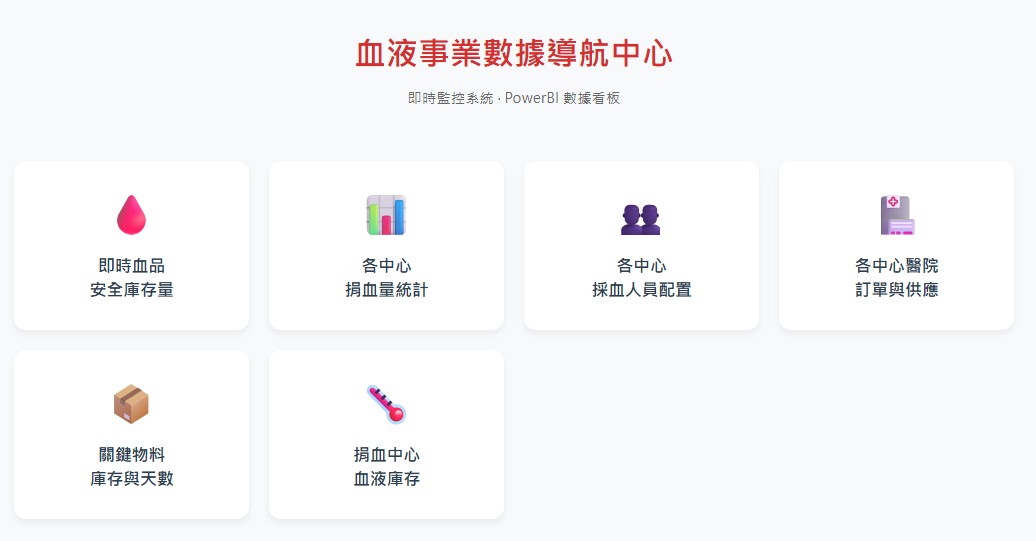
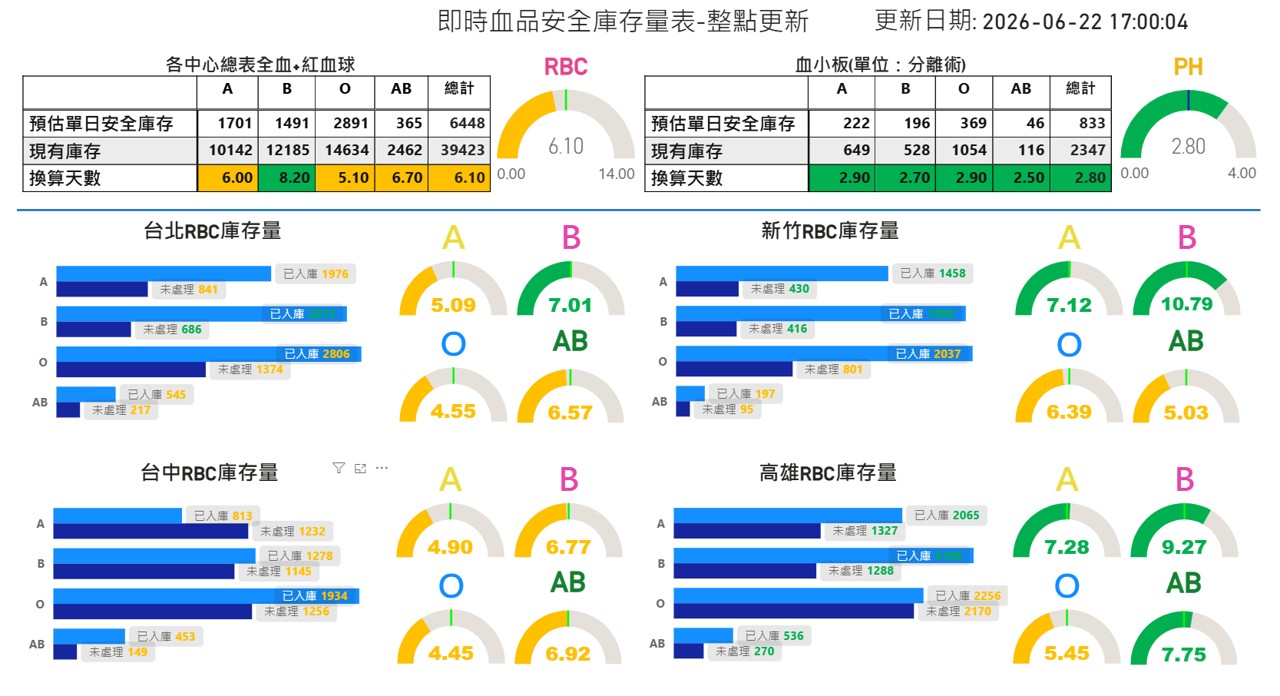
Images showing related dashboard screens
Drone Blood Delivery: Emergency Delivery Innovation That Overcomes Ground Transportation Limitations
Preparing blood is only the first step. How to deliver it immediately when roads are blocked is another critical issue. Taiwan’s terrain is complex, and typhoons, earthquakes, or other major disasters often cause road interruptions, putting the ground delivery system under severe pressure.
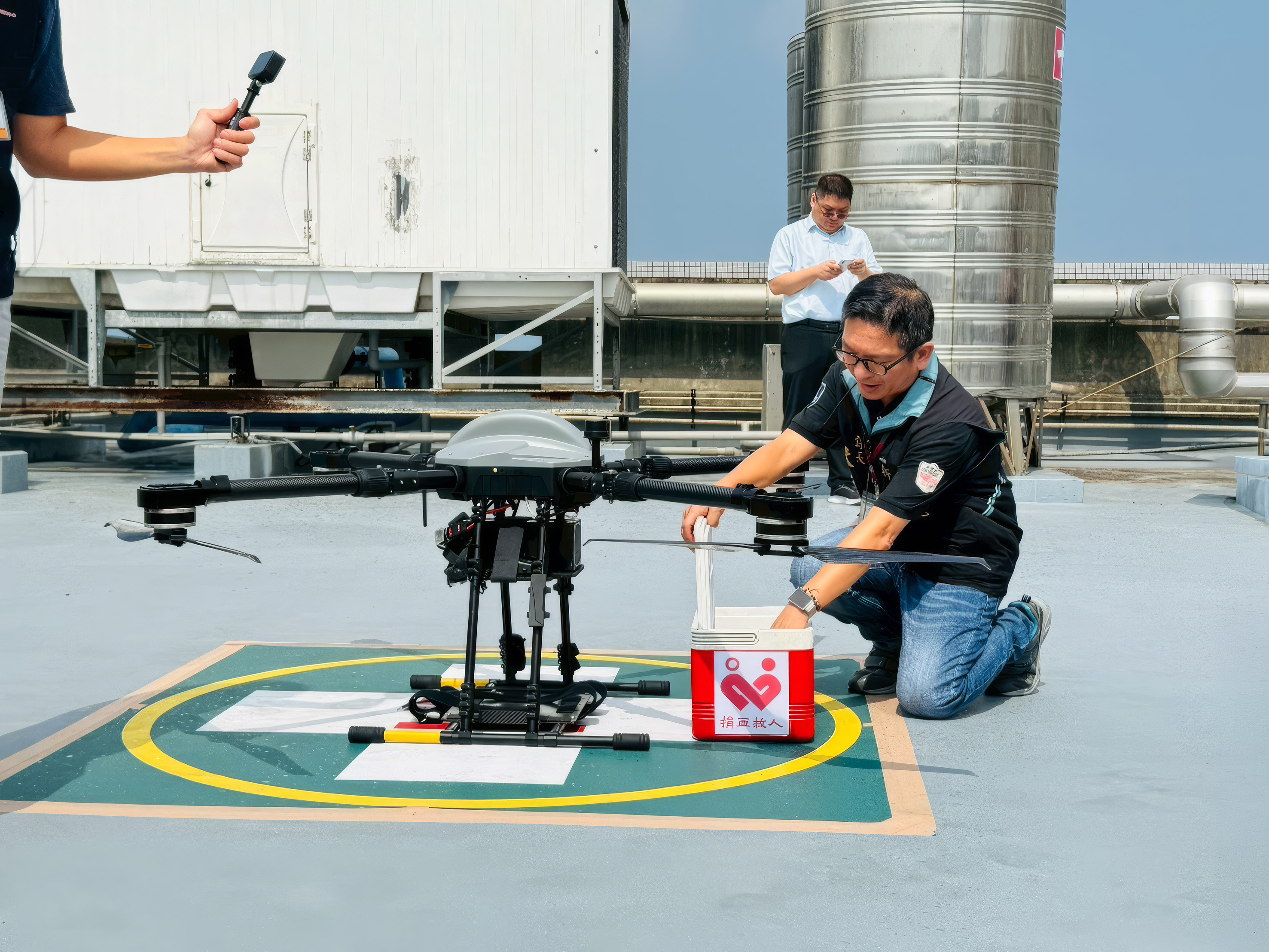
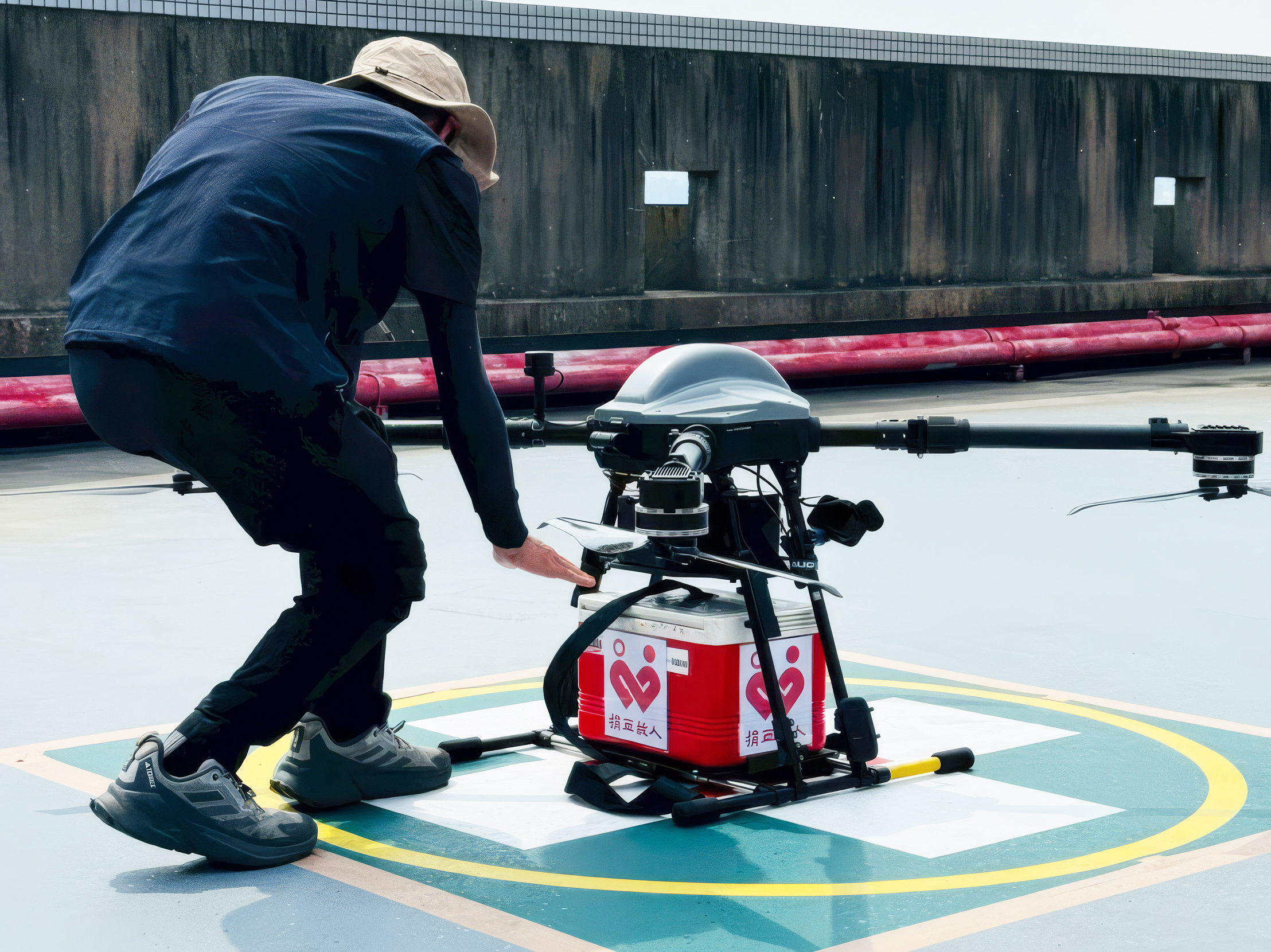
Images of drone blood delivery: emergency delivery innovation that overcomes ground transportation limitations
The Foundation has partnered with technology company Flying Intelligence to invest in the research, development, and field verification of emergency drone blood delivery technology. In October 2024, Hsinchu Blood Center held a demonstration in Zhubei, using a drone to carry a blood transport container across the Touqian River. The drone completed a flight of approximately 5 kilometers in just 10 minutes, successfully delivering blood products to the Hsinchu Branch of Taoyuan Armed Forces General Hospital. This innovation breaks through the physical limitations of ground transportation and extends emergency blood dispatch capabilities to areas that were previously difficult to cover in real time.
The integrated concept of “in-hospital blood storage” and “hot-blooded flight” won first place in the Outstanding Team Award at the 2025 Presidential Hackathon under the team name “Liver Warriors,” with the award personally presented by President Lai Ching-te. This recognition is not only an affirmation of an innovative experiment, but also a sign that Taiwan’s blood services are proactively embracing new technologies and applying innovative thinking. By integrating digital tools and unmanned vehicles into practical medical emergency response scenarios, the Foundation is injecting new technological momentum into the traditional blood donation and supply system, enabling blood donation and supply resilience to advance in step with the times.
Share on
-
Copied to clipboard
Articles
2024.02.20