
Latest News
2025.02.19
News | Taiwan Blood Services Foundation ESG
- News
- Latest News
- In-Hospital Blood Storage × Hot-Blooded Flight: TBSF Joins Team to Win Excellence Award at 2025 Presidential Hackathon
Back to List
In-Hospital Blood Storage × Hot-Blooded Flight: TBSF Joins Team to Win Excellence Award at 2025 Presidential Hackathon
Latest News
2026.01.19
In the 2025 Presidential Hackathon, the "Hardworking Team" (Gan-Ku-Ren Team)—a group composed of professionals from fire, medical, and ICT sectors—won first place in the Excellence Awards with their theme "Ice and Fire: Flying Hot Blood and Smart Cold Chain." The Taiwan Blood Services Foundation (TBSF), a key member of the team, successfully integrated two initiatives: "In-Hospital Blood Storage" and "Hot-Blooded Flight." This combination allows "a bag of blood" to be transported via drone, enabling pre-hospital blood transfusion—a critical component of Taiwan's emergency rescue system—to effectively secure the "golden hour" for saving lives.
Each year, the Presidential Hackathon selects the top 5 teams for the "Excellence Award," with the President personally presenting the trophies and certificates. On December 14, 2025, President Lai Ching-te congratulated the winning teams, highly affirming their efforts to integrate blood donation center and hospital resources, establish an emergency disaster blood supply system, improve survival rates for trauma patients in remote areas, and strengthen medical resilience.
Winning First Place in Excellence Award, President Lai Personally Presents the Award
This team includes units such as the Cifu Branch of the Special Search and Rescue Team (New Taipei City Fire Department), the Department of Emergency Medicine at New Taipei City Hospital, Tri-Service General Hospital, Chunghwa Telecom, Fetch Intelligence Co., Ltd., and the Taiwan Blood Services Foundation.
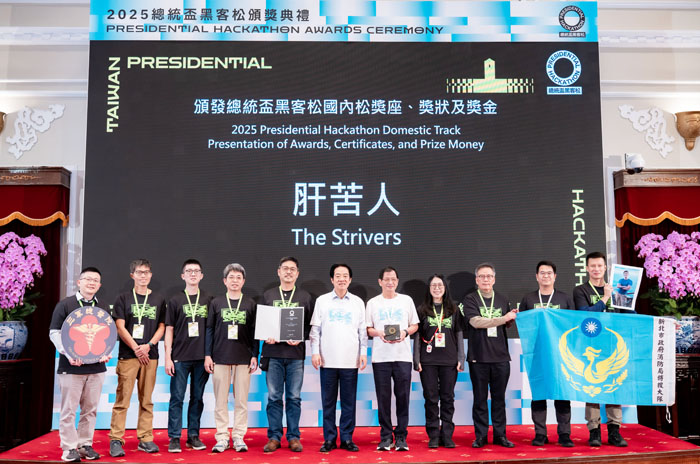
President Lai Ching-te (center) personally presenting the award and posing with the winning team at the 2025 Presidential Hackathon. (Photo courtesy of the Presidential Office)
As an Emergency Medical Technician (EMT), Chen Hui-han, squad leader at the Cifu Branch of the New Taipei City Fire Department's Special Search and Rescue Team, races against time every day and engages in a constant tug-of-war with death. He stated that the proposal for "In-Hospital Blood Storage, Hot-Blooded Flight" was born from the "blood and tears lessons" of numerous rescue experiences. Seeking continuous reform, he hopes this plan can be implemented on the ground so that every rescuer arriving at an accident scene can confidently tell the injured: "We will definitely bring you home to your family."
Chen Hui-han said that sometimes victims "are not incurable, but we lack the weapons to save them." After much effort, at the end of 2023, the New Taipei City Emergency Medical Service Consulting Committee agreed to allow life-saving blood to be brought to emergency scenes, establishing the nation's first pre-hospital transfusion system and simultaneously activating a dual-track medical support mechanism.
The biggest breakthrough in pushing the scene of in-hospital emergency transfusion to the accident site lies in urgently transporting life-saving doctors and blood bags to the scene to rescue patients with massive hemorrhaging. Under current regulations, EMTs are not formal medical personnel and cannot administer medication or perform transfusions. Therefore, without amending the law, the system uses a dual-dispatch mode to deliver doctors, medicine, and blood products to the scene.
Emergency Rescue in Wanli Crash: Taiwan's First Pre-Hospital Transfusion
Chen Hui-han stated that in July of this year (2025), a major accident occurred in Wanli District, New Taipei City, involving a gravel truck colliding with a bus. The gravel truck driver was trapped inside, with extrication expected to take over an hour. The New Taipei City Fire Department activated the mass casualty dual-track medical support mechanism. Two branches of the Special Search and Rescue Team closest to the disaster site were responsible for the extrication; the Nanya Branch went to Far Eastern Memorial Hospital to pick up medical personnel, while the Cifu Branch went to the Sanchong Branch of New Taipei City Hospital to collect 4 units of packed red blood cells, 2 units of fresh frozen plasma, and necessary emergency drugs. These four groups departed from different locations and converged at the accident scene.
At the time, the gravel truck driver was critically injured, in shock, and his life was hanging by a thread. The Cifu Branch arrived with the blood products in time to stabilize his vital signs, allowing him to be successfully transported to the hospital for further surgery. "We saved his life with one bag of blood. This was Taiwan's first case of pre-hospital transfusion. This is change," said Chen Hui-han, noting that it gave rescuers a confidence boost akin to a shot of adrenaline.
However, this joy was washed away by another highway accident half a month later. Chen said that in August, a high-speed rear-end collision occurred on the Linkou section of the freeway. The victim was trapped in the driver's seat. Although doctors and paramedics arrived at the scene to help, the life-saving blood bags and medicine were still 20 kilometers away. "We could only watch helplessly as the victim lost vital signs. Even though the blood arrived 10 minutes later, it was already too late."
Letting Blood Fly: Drones Shorten Arrival Time
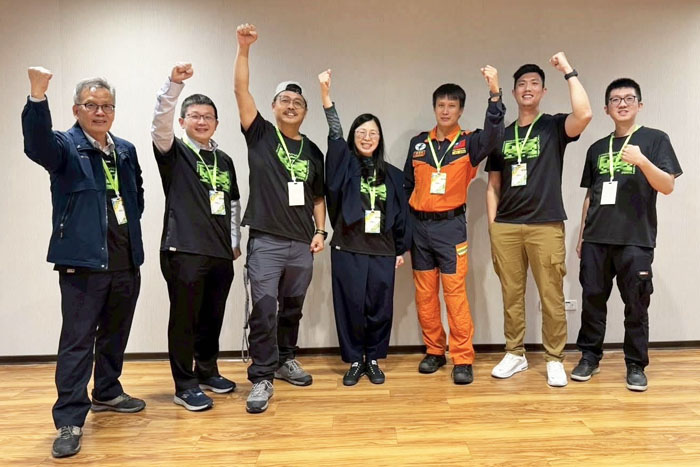
Members of the Hardworking Team, with TBSF CEO Wang Tzong-hsi pictured in the center.
"We realized that even with sirens blaring and the pedal to the metal, the blood products still weren't arriving fast enough. Could we be any faster?" Chen Hui-han and Dr. Bai Feng-cheng from the Tri-Service General Hospital Emergency Department had a spark of inspiration: Let the blood fly. In early October, the Hsinchu Blood Center of the Taiwan Blood Services Foundation completed a "Drone Emergency Medical Blood Delivery Plan" drill, which caught Chen's eye, and thus the "Hardworking Team" was formed.
This team connected the New Taipei Fire Department's dual-track medical support system, Fetch Intelligence Co.'s AI analysis of New Taipei disaster hotspots, Tri-Service General Hospital's clinical rescue assessment, TBSF's blood cold chain transport, and Chunghwa Telecom's drone flight operations. Under the guidance of the Civil Aeronautics Administration, they planned seven emergency flight corridors covering Sanzhi, Shimen, Sanxia, Jinshan, Wulai, Gongliao, and Jiufen. The plan activates large drone blood delivery when hotspots are dysfunctional or emergency resources are insufficient, aiming to shorten the arrival time of blood products so regrets are not repeated.
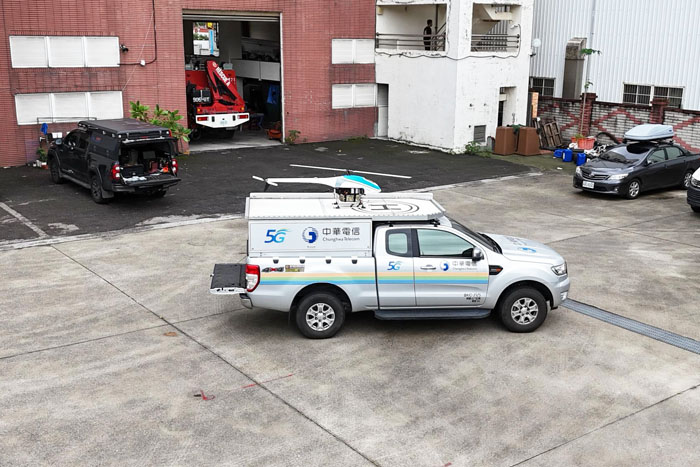
The Hardworking Team combined the "In-Hospital Blood Storage" and "Hot-Blooded Flight" schemes, utilizing large drones to transport blood products and save delivery time.
In October of this year (2025), the New Taipei City Medical Consulting Committee approved the provision of blood and drugs by Sanchong City Hospital for drone flight testing and cold chain verification. Chen Hui-han noted that the journey from Sanchong to Bali, which is over 20 kilometers, took only 18 minutes by drone, saving 52% of the time compared to traditional vehicle transport.
Strengthening Medical Resilience in Blood Supply: Technical Support from TBSF
TBSF Chairman Hou Sheng-mao stated that Taiwan faces geopolitical risks and frequent natural disasters. Strengthening the medical resilience of the blood supply has always been the diligent effort of Foundation colleagues and an inescapable mission. To achieve this ultimate goal, the Foundation's priority is to enhance the stability of the blood supply, precisely grasp demand, optimize scheduling, and prevent regional shortages. Additionally, the Foundation is actively improving its response capabilities for major disasters, pre-planning so that the donation and supply system can function—or have backup mechanisms—when large-scale catastrophes strike. This includes drills for drone blood delivery tools, activating internal hospital donation operations during major disasters, and actively developing "Walking Blood Banks" and pre-hospital transfusion supply models to cope with any changes.
TBSF CEO Wang Tzong-hsi also mentioned that in late October of this year (2025), the Association for the Advancement of Blood & Biotherapies (AABB) held its annual meeting in San Diego, USA. One of the discussion topics was "Pre-hospital Transfusion." The meeting reaffirmed that pre-hospital transfusion is key to saving patients with massive traumatic hemorrhage, and the AABB formally recognized pre-hospital transfusion as a part of medical practice, effective July 2025.
Wang emphasized that blood storage and transport require strict temperature control. Once blood leaves the hospital's cold chain environment, it may have to be discarded if unused. Therefore, regarding New Taipei City's "In-Hospital Blood Storage, Hot-Blooded Flight" plan, the Foundation is more than willing to provide technical support for blood storage, dispatch, and cold chain transport.
Furthermore, international medical research has shown that using "Low-Titer O Whole Blood" (LTOWB) for severely injured patients allows for the rapid replenishment of red blood cells and coagulation factors without waiting for plasma to thaw, effectively improving survival rates. TBSF is actively conducting research and application to align with pre-hospital transfusion needs and simplify transfusion processes, truly keeping pace with international trends and treatment requirements.
Chen Hui-han stated that according to data statistics from New Taipei City, if this life-saving system is implemented, it is estimated to save 264 lives in time, meaning 264 families will not be broken. He hopes to receive government funding after winning the Hackathon and is confident that by 2028, the National Fire Agency will expand the drone blood delivery model nationwide. This would allow drones to land at any disaster site in Taiwan, improving the emergency survival rate for major trauma victims and solving emergency medical challenges in remote or traffic-congested areas, becoming the most solid shield protecting the lives of citizens.
Each year, the Presidential Hackathon selects the top 5 teams for the "Excellence Award," with the President personally presenting the trophies and certificates. On December 14, 2025, President Lai Ching-te congratulated the winning teams, highly affirming their efforts to integrate blood donation center and hospital resources, establish an emergency disaster blood supply system, improve survival rates for trauma patients in remote areas, and strengthen medical resilience.
Winning First Place in Excellence Award, President Lai Personally Presents the Award
This team includes units such as the Cifu Branch of the Special Search and Rescue Team (New Taipei City Fire Department), the Department of Emergency Medicine at New Taipei City Hospital, Tri-Service General Hospital, Chunghwa Telecom, Fetch Intelligence Co., Ltd., and the Taiwan Blood Services Foundation.
President Lai Ching-te (center) personally presenting the award and posing with the winning team at the 2025 Presidential Hackathon. (Photo courtesy of the Presidential Office)
As an Emergency Medical Technician (EMT), Chen Hui-han, squad leader at the Cifu Branch of the New Taipei City Fire Department's Special Search and Rescue Team, races against time every day and engages in a constant tug-of-war with death. He stated that the proposal for "In-Hospital Blood Storage, Hot-Blooded Flight" was born from the "blood and tears lessons" of numerous rescue experiences. Seeking continuous reform, he hopes this plan can be implemented on the ground so that every rescuer arriving at an accident scene can confidently tell the injured: "We will definitely bring you home to your family."
Chen Hui-han said that sometimes victims "are not incurable, but we lack the weapons to save them." After much effort, at the end of 2023, the New Taipei City Emergency Medical Service Consulting Committee agreed to allow life-saving blood to be brought to emergency scenes, establishing the nation's first pre-hospital transfusion system and simultaneously activating a dual-track medical support mechanism.
The biggest breakthrough in pushing the scene of in-hospital emergency transfusion to the accident site lies in urgently transporting life-saving doctors and blood bags to the scene to rescue patients with massive hemorrhaging. Under current regulations, EMTs are not formal medical personnel and cannot administer medication or perform transfusions. Therefore, without amending the law, the system uses a dual-dispatch mode to deliver doctors, medicine, and blood products to the scene.
Emergency Rescue in Wanli Crash: Taiwan's First Pre-Hospital Transfusion
Chen Hui-han stated that in July of this year (2025), a major accident occurred in Wanli District, New Taipei City, involving a gravel truck colliding with a bus. The gravel truck driver was trapped inside, with extrication expected to take over an hour. The New Taipei City Fire Department activated the mass casualty dual-track medical support mechanism. Two branches of the Special Search and Rescue Team closest to the disaster site were responsible for the extrication; the Nanya Branch went to Far Eastern Memorial Hospital to pick up medical personnel, while the Cifu Branch went to the Sanchong Branch of New Taipei City Hospital to collect 4 units of packed red blood cells, 2 units of fresh frozen plasma, and necessary emergency drugs. These four groups departed from different locations and converged at the accident scene.
At the time, the gravel truck driver was critically injured, in shock, and his life was hanging by a thread. The Cifu Branch arrived with the blood products in time to stabilize his vital signs, allowing him to be successfully transported to the hospital for further surgery. "We saved his life with one bag of blood. This was Taiwan's first case of pre-hospital transfusion. This is change," said Chen Hui-han, noting that it gave rescuers a confidence boost akin to a shot of adrenaline.
However, this joy was washed away by another highway accident half a month later. Chen said that in August, a high-speed rear-end collision occurred on the Linkou section of the freeway. The victim was trapped in the driver's seat. Although doctors and paramedics arrived at the scene to help, the life-saving blood bags and medicine were still 20 kilometers away. "We could only watch helplessly as the victim lost vital signs. Even though the blood arrived 10 minutes later, it was already too late."
Letting Blood Fly: Drones Shorten Arrival Time
Members of the Hardworking Team, with TBSF CEO Wang Tzong-hsi pictured in the center.
"We realized that even with sirens blaring and the pedal to the metal, the blood products still weren't arriving fast enough. Could we be any faster?" Chen Hui-han and Dr. Bai Feng-cheng from the Tri-Service General Hospital Emergency Department had a spark of inspiration: Let the blood fly. In early October, the Hsinchu Blood Center of the Taiwan Blood Services Foundation completed a "Drone Emergency Medical Blood Delivery Plan" drill, which caught Chen's eye, and thus the "Hardworking Team" was formed.
This team connected the New Taipei Fire Department's dual-track medical support system, Fetch Intelligence Co.'s AI analysis of New Taipei disaster hotspots, Tri-Service General Hospital's clinical rescue assessment, TBSF's blood cold chain transport, and Chunghwa Telecom's drone flight operations. Under the guidance of the Civil Aeronautics Administration, they planned seven emergency flight corridors covering Sanzhi, Shimen, Sanxia, Jinshan, Wulai, Gongliao, and Jiufen. The plan activates large drone blood delivery when hotspots are dysfunctional or emergency resources are insufficient, aiming to shorten the arrival time of blood products so regrets are not repeated.
The Hardworking Team combined the "In-Hospital Blood Storage" and "Hot-Blooded Flight" schemes, utilizing large drones to transport blood products and save delivery time.
In October of this year (2025), the New Taipei City Medical Consulting Committee approved the provision of blood and drugs by Sanchong City Hospital for drone flight testing and cold chain verification. Chen Hui-han noted that the journey from Sanchong to Bali, which is over 20 kilometers, took only 18 minutes by drone, saving 52% of the time compared to traditional vehicle transport.
Strengthening Medical Resilience in Blood Supply: Technical Support from TBSF
TBSF Chairman Hou Sheng-mao stated that Taiwan faces geopolitical risks and frequent natural disasters. Strengthening the medical resilience of the blood supply has always been the diligent effort of Foundation colleagues and an inescapable mission. To achieve this ultimate goal, the Foundation's priority is to enhance the stability of the blood supply, precisely grasp demand, optimize scheduling, and prevent regional shortages. Additionally, the Foundation is actively improving its response capabilities for major disasters, pre-planning so that the donation and supply system can function—or have backup mechanisms—when large-scale catastrophes strike. This includes drills for drone blood delivery tools, activating internal hospital donation operations during major disasters, and actively developing "Walking Blood Banks" and pre-hospital transfusion supply models to cope with any changes.
TBSF CEO Wang Tzong-hsi also mentioned that in late October of this year (2025), the Association for the Advancement of Blood & Biotherapies (AABB) held its annual meeting in San Diego, USA. One of the discussion topics was "Pre-hospital Transfusion." The meeting reaffirmed that pre-hospital transfusion is key to saving patients with massive traumatic hemorrhage, and the AABB formally recognized pre-hospital transfusion as a part of medical practice, effective July 2025.
Wang emphasized that blood storage and transport require strict temperature control. Once blood leaves the hospital's cold chain environment, it may have to be discarded if unused. Therefore, regarding New Taipei City's "In-Hospital Blood Storage, Hot-Blooded Flight" plan, the Foundation is more than willing to provide technical support for blood storage, dispatch, and cold chain transport.
Furthermore, international medical research has shown that using "Low-Titer O Whole Blood" (LTOWB) for severely injured patients allows for the rapid replenishment of red blood cells and coagulation factors without waiting for plasma to thaw, effectively improving survival rates. TBSF is actively conducting research and application to align with pre-hospital transfusion needs and simplify transfusion processes, truly keeping pace with international trends and treatment requirements.
Chen Hui-han stated that according to data statistics from New Taipei City, if this life-saving system is implemented, it is estimated to save 264 lives in time, meaning 264 families will not be broken. He hopes to receive government funding after winning the Hackathon and is confident that by 2028, the National Fire Agency will expand the drone blood delivery model nationwide. This would allow drones to land at any disaster site in Taiwan, improving the emergency survival rate for major trauma victims and solving emergency medical challenges in remote or traffic-congested areas, becoming the most solid shield protecting the lives of citizens.
Share on
-
Copied to clipboard
Latest News
2024.12.14