
Latest News
2026.07.14
News | Taiwan Blood Services Foundation ESG
- News
- Latest News
- Taiwan Blood Services Strengthens International Connections: CEO Tsung-Hsi Wang Leads Delegation to the AABB Annual Meeting in the United States
Back to List
Taiwan Blood Services Strengthens International Connections: CEO Tsung-Hsi Wang Leads Delegation to the AABB Annual Meeting in the United States
Latest News
2026.11.16
To enhance the international visibility of Taiwan's blood services and promote international exchanges in transfusion medicine and blood management, Tsung-Hsi Wang, CEO of the Taiwan Blood Services Foundation, led a delegation to the United States to attend the Annual Meeting of the Association for the Advancement of Blood & Biotherapies (AABB). Through oral and poster presentations, the delegation shared Taiwan's experience in managing blood supply and demand, particularly the integration of process automation and smart technologies at the Annan Blood Component Manufacturing Site, which officially opened in June this year. The delegation also exchanged knowledge and experiences with blood service organizations and transfusion medicine experts from around the world, demonstrating Taiwan's continued commitment to innovation and international collaboration in blood services.
AABB is one of the most influential professional organizations in the fields of transfusion medicine and blood services worldwide. Its annual meeting is among the most prominent international academic events in blood and biotherapies, attracting approximately 3,500 to 4,000 professionals from more than 50 countries each year. Through scientific presentations, keynote lectures, and international exchanges, participants share the latest global research findings and technological developments, fostering international professional cooperation in blood services and transfusion medicine.
This year's AABB Annual Meeting was held from October 17 to 19 in Atlanta, Georgia, United States. The Taiwan Blood Services Foundation organized a delegation led by CEO Tsung-Hsi Wang. Delegation members included Shun-Chung Pai, Director of the Business Department; Chia-Hung Hsieh, Director of the Information Technology Department; Yun-Yuan Chen, Associate Researcher of the Research Department; Ying-Sheng Hung, Director of Taichung Blood Center; Tzu-Hsun Chang, Chief of the Technical Division at Hsinchu Blood Center; Chi-Te Lu, Chief of the Technical Division at Kaohsiung Blood Center; and Ko-Han Chao, Chief of the Information Technology Section at Taipei Blood Center.
The Foundation's delegation participated in international academic exchanges through both oral and poster presentations. CEO Tsung-Hsi Wang stated that attending the AABB Annual Meeting was not merely an opportunity to present research findings, but more importantly, a platform for understanding the common challenges faced by blood service organizations worldwide, learning from the management experience and technological applications of advanced countries, and sharing Taiwan's practical experience with the international community. In particular, following the opening of the Annan Blood Component Manufacturing Site in June this year, the Foundation presented a research paper titled "A New Facility Model: Sharing the Experience of the Annan Blood Component Manufacturing Site," which received the conference's prestigious Top Poster Award.
The paper primarily highlighted that the Annan Blood Component Manufacturing Site not only complies with the international Good Manufacturing Practice (GMP) standards of the Pharmaceutical Inspection Co-operation Scheme (PIC/S), but also integrates large-scale automation with the Artificial Intelligence of Things (AIoT). This marks an important step toward smarter, more automated, and highly resilient blood services in Taiwan, positioning the facility as a potential model for the digital transformation of blood services in Asia.
Chi-Te Lu explained that the Annan Blood Component Manufacturing Site employs a Total Laboratory Automation (TLA) tracking system for routine blood donor testing and has fully implemented an automated blood bag feeding and labeling system. By integrating blood centers, medical institutions, logistics, and information systems, the facility has transformed traditional blood supply processes that relied on manual communication, paper records, and experience-based decision-making into a real-time, transparent, and traceable digital management model. Automated guided vehicles have also been introduced for material transportation, optimizing logistics and further improving operational efficiency and blood supply quality.
Another poster presentation, titled "Prevalence and Incidence of Syphilis Infection Among Blood Donors in Taiwan, 2018–2025," examined the relationship between syphilis infection trends and blood donation in Taiwan in recent years. A total of 1,776 cases of syphilis infection were identified. Of particular concern was the increasing trend in both syphilis prevalence and incidence among younger blood donors. All blood units that tested positive for syphilis were promptly excluded from the blood supply.
By analyzing all blood donation records in Taiwan from 2018 to 2025, the Foundation found that the prevalence of syphilis infection among first-time blood donors was significantly higher than among repeat donors. Both prevalence and incidence showed increasing trends among donors under the age of 25, consistent with trends observed in national notifiable infectious disease surveillance data. These findings indicate that syphilis prevention and control efforts among younger populations must continue to be strengthened.
The study showed that in 2025, the prevalence of syphilis infection among first-time blood donors was 73.1 per 100,000, compared with 15.7 per 100,000 among repeat donors. The prevalence among first-time donors was approximately 4.7 times that of repeat donors. Looking at the overall trend from 2018 to 2025, the prevalence of infection among first-time donors consistently remained significantly higher than among repeat donors. This reflects the fact that repeat donors undergo multiple health assessments and blood screenings, forming a relatively healthy donor population. The findings also highlight the importance of regular blood donation and continuous blood safety management. Accordingly, the Taiwan Blood Services Foundation emphasized that pre-donation screening is an essential safeguard for blood safety and urged the public not to use blood donation as a means of testing themselves for sexually transmitted infections.
Media Contact: Chien-Fu Chan, Public Relations Department, Taiwan Blood Services Foundation +886-2-2351-1600 ext. 333
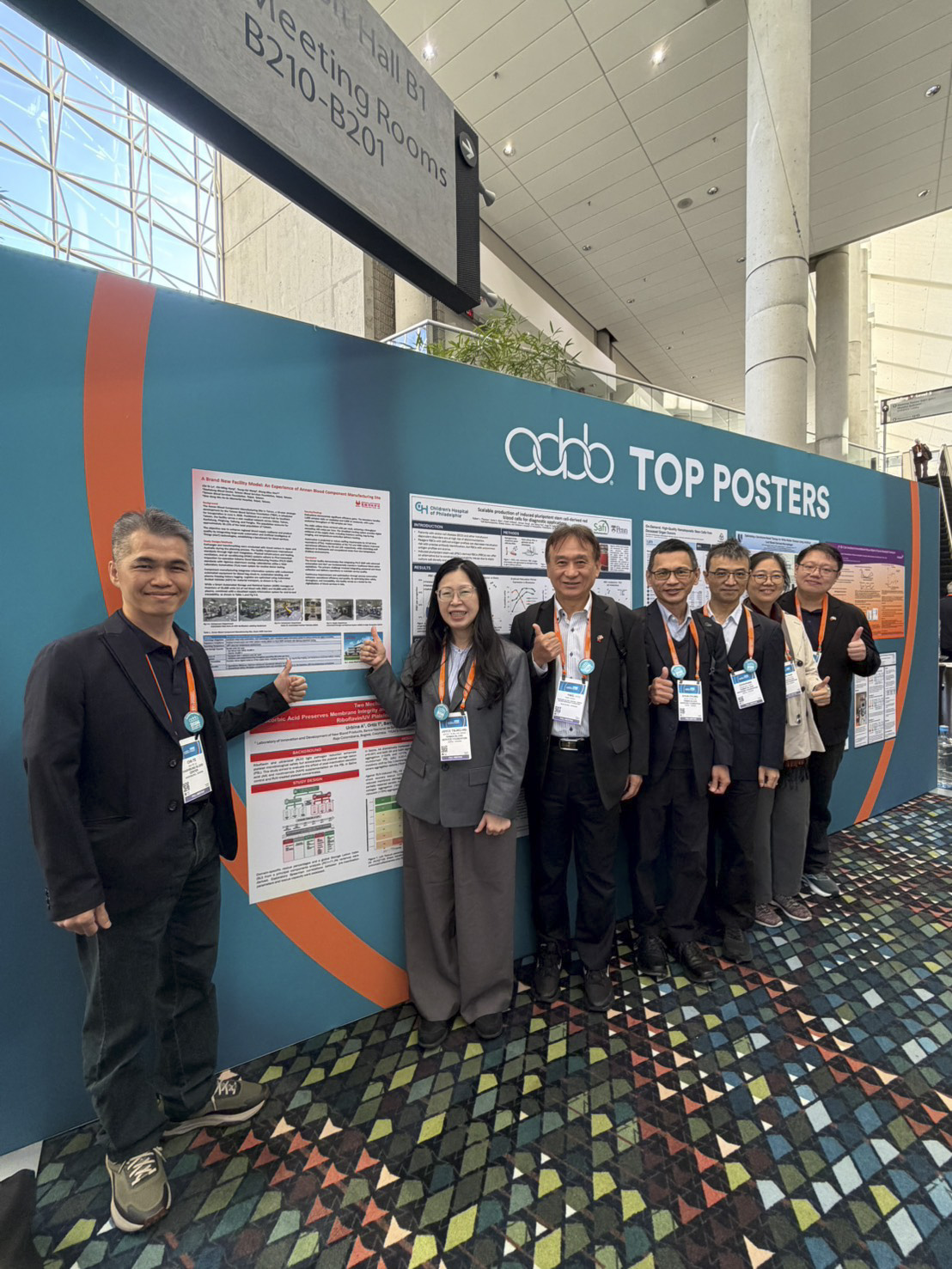
Figure 1. Tsung-Hsi Wang, CEO of the Taiwan Blood Services Foundation (second from left), led a delegation to the United States to attend the Annual Meeting of the Association for the Advancement of Blood & Biotherapies (AABB) and share Taiwan's experience. The delegation posed for a group photo in front of the Top Poster Award display at the conference exhibition venue.
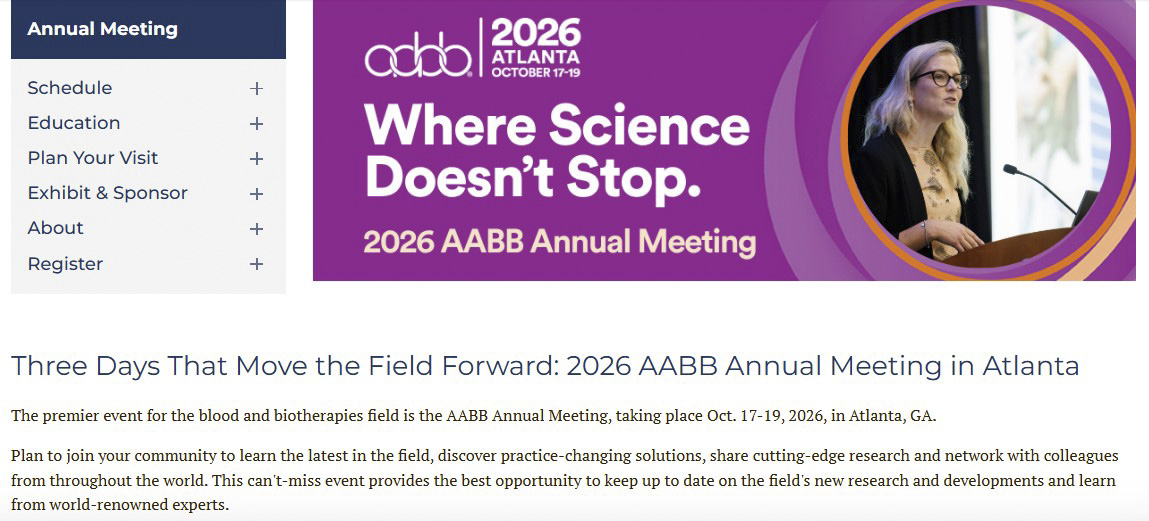
Figure 2. The Association for the Advancement of Blood & Biotherapies (AABB) held its 2026 Annual Meeting from October 17 to 19. The photo shows the conference theme, "Where Science Doesn't Stop."
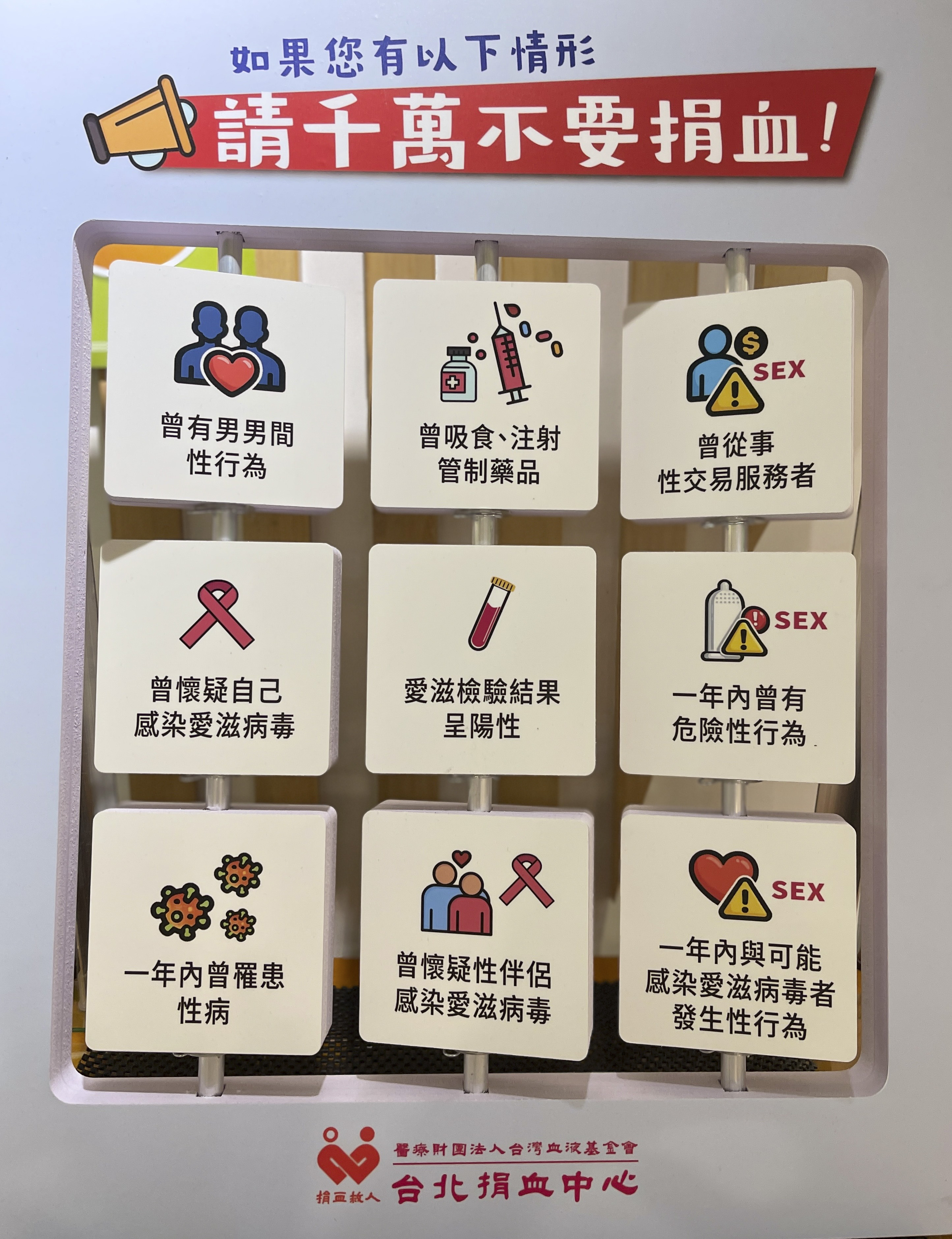
Figure 3. Research conducted by the Taiwan Blood Services Foundation found increasing trends in both syphilis prevalence and incidence among younger blood donors. The Foundation urges the public not to use blood donation as a means of testing for sexually transmitted infections.
AABB is one of the most influential professional organizations in the fields of transfusion medicine and blood services worldwide. Its annual meeting is among the most prominent international academic events in blood and biotherapies, attracting approximately 3,500 to 4,000 professionals from more than 50 countries each year. Through scientific presentations, keynote lectures, and international exchanges, participants share the latest global research findings and technological developments, fostering international professional cooperation in blood services and transfusion medicine.
This year's AABB Annual Meeting was held from October 17 to 19 in Atlanta, Georgia, United States. The Taiwan Blood Services Foundation organized a delegation led by CEO Tsung-Hsi Wang. Delegation members included Shun-Chung Pai, Director of the Business Department; Chia-Hung Hsieh, Director of the Information Technology Department; Yun-Yuan Chen, Associate Researcher of the Research Department; Ying-Sheng Hung, Director of Taichung Blood Center; Tzu-Hsun Chang, Chief of the Technical Division at Hsinchu Blood Center; Chi-Te Lu, Chief of the Technical Division at Kaohsiung Blood Center; and Ko-Han Chao, Chief of the Information Technology Section at Taipei Blood Center.
The Foundation's delegation participated in international academic exchanges through both oral and poster presentations. CEO Tsung-Hsi Wang stated that attending the AABB Annual Meeting was not merely an opportunity to present research findings, but more importantly, a platform for understanding the common challenges faced by blood service organizations worldwide, learning from the management experience and technological applications of advanced countries, and sharing Taiwan's practical experience with the international community. In particular, following the opening of the Annan Blood Component Manufacturing Site in June this year, the Foundation presented a research paper titled "A New Facility Model: Sharing the Experience of the Annan Blood Component Manufacturing Site," which received the conference's prestigious Top Poster Award.
The paper primarily highlighted that the Annan Blood Component Manufacturing Site not only complies with the international Good Manufacturing Practice (GMP) standards of the Pharmaceutical Inspection Co-operation Scheme (PIC/S), but also integrates large-scale automation with the Artificial Intelligence of Things (AIoT). This marks an important step toward smarter, more automated, and highly resilient blood services in Taiwan, positioning the facility as a potential model for the digital transformation of blood services in Asia.
Chi-Te Lu explained that the Annan Blood Component Manufacturing Site employs a Total Laboratory Automation (TLA) tracking system for routine blood donor testing and has fully implemented an automated blood bag feeding and labeling system. By integrating blood centers, medical institutions, logistics, and information systems, the facility has transformed traditional blood supply processes that relied on manual communication, paper records, and experience-based decision-making into a real-time, transparent, and traceable digital management model. Automated guided vehicles have also been introduced for material transportation, optimizing logistics and further improving operational efficiency and blood supply quality.
Another poster presentation, titled "Prevalence and Incidence of Syphilis Infection Among Blood Donors in Taiwan, 2018–2025," examined the relationship between syphilis infection trends and blood donation in Taiwan in recent years. A total of 1,776 cases of syphilis infection were identified. Of particular concern was the increasing trend in both syphilis prevalence and incidence among younger blood donors. All blood units that tested positive for syphilis were promptly excluded from the blood supply.
By analyzing all blood donation records in Taiwan from 2018 to 2025, the Foundation found that the prevalence of syphilis infection among first-time blood donors was significantly higher than among repeat donors. Both prevalence and incidence showed increasing trends among donors under the age of 25, consistent with trends observed in national notifiable infectious disease surveillance data. These findings indicate that syphilis prevention and control efforts among younger populations must continue to be strengthened.
The study showed that in 2025, the prevalence of syphilis infection among first-time blood donors was 73.1 per 100,000, compared with 15.7 per 100,000 among repeat donors. The prevalence among first-time donors was approximately 4.7 times that of repeat donors. Looking at the overall trend from 2018 to 2025, the prevalence of infection among first-time donors consistently remained significantly higher than among repeat donors. This reflects the fact that repeat donors undergo multiple health assessments and blood screenings, forming a relatively healthy donor population. The findings also highlight the importance of regular blood donation and continuous blood safety management. Accordingly, the Taiwan Blood Services Foundation emphasized that pre-donation screening is an essential safeguard for blood safety and urged the public not to use blood donation as a means of testing themselves for sexually transmitted infections.
Media Contact: Chien-Fu Chan, Public Relations Department, Taiwan Blood Services Foundation +886-2-2351-1600 ext. 333
Figure 1. Tsung-Hsi Wang, CEO of the Taiwan Blood Services Foundation (second from left), led a delegation to the United States to attend the Annual Meeting of the Association for the Advancement of Blood & Biotherapies (AABB) and share Taiwan's experience. The delegation posed for a group photo in front of the Top Poster Award display at the conference exhibition venue.
Figure 2. The Association for the Advancement of Blood & Biotherapies (AABB) held its 2026 Annual Meeting from October 17 to 19. The photo shows the conference theme, "Where Science Doesn't Stop."
Figure 3. Research conducted by the Taiwan Blood Services Foundation found increasing trends in both syphilis prevalence and incidence among younger blood donors. The Foundation urges the public not to use blood donation as a means of testing for sexually transmitted infections.
Share on
-
Copied to clipboard
Latest News
2024.12.14